Final Post: My Relationship with Technology

 I grew up rather disconnected from technology and I struggled with social skills due to my inability to chose between languages to speak. I...

Thursday, March 24, 2022

KEY: Eight Values of Free Expression

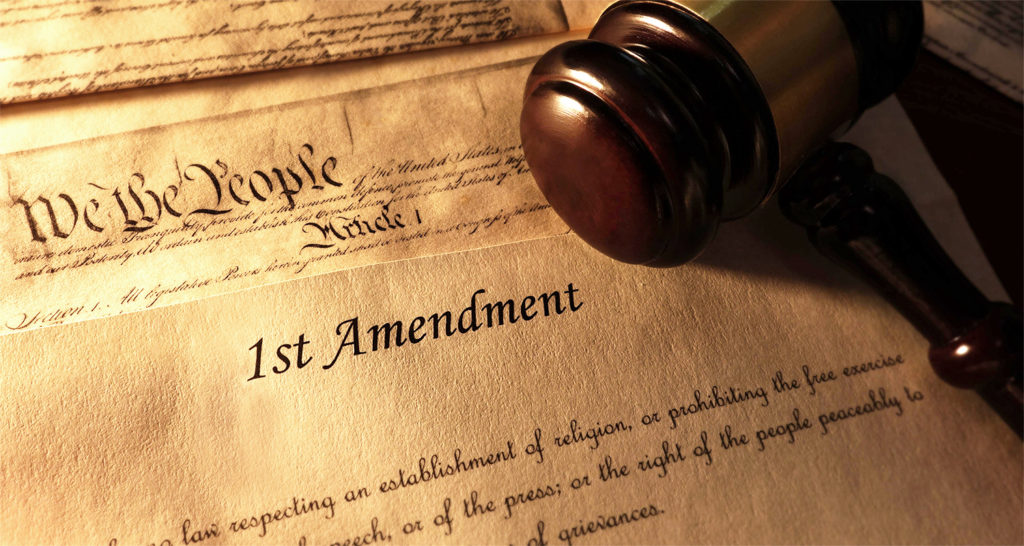
As stated by the First Amendment of the United States, the People are promised the right to 

  • Respect of their establishment of religion
  • Free practicing of their faith
  • Freedom of speech
  • Freedom the press
  • Peaceably assemble
  • And to petition the government 

In the Speech Theories section of medlawlit, there are also eight values of free expression written out for observation and understanding. They are as follows:

  1. Marketplace of Ideas (AKA Discovery of Truth): first suggested by John Milton, saying that when truth and falsehood are allowed to freely fight, truth wins out and is stronger when fought over. Milton argued against a licensing/publishing license.
  2. Participation in Self-Government: suggested by Alexander Meiklejohn that citizens will not make wise and informed choices in elections if candidates and proponents of certain policies are restricted in their ability to communicate positions. 
  3. Stable Change (AKA Safety Valve): suggested by Benedict Spinoza. A society in which angry and alienated citizens are allowed to speak their mind, or "vent," will be more stable, as people will be less likely to resort to violence. Ultimately, it is in the governments own self-interest to allow such venting.
  4. Individual Self-Fulfillment (AKA Self-Actualization): suggested by C. Edwin Baker. Free speech enable individuals to express themselves and thereby create their own identity, and possibly relationships with kindred spirts in the process. Freedom of speech becomes an aspect of human dignity, agency and autonomy. 
  5. Check on Governmental Power (AKA Watchdog Role: elaborated by Vince Blasi. Freedom of the press enables citizens to learn about abuses of power, and then do something about the abuse at the ballot box if they feel so moved. Enables the People to be part of the check-and-balance system to restrains government power and abuse of power.
  6. Promote Tolerance: elaborated by Lee Bollinger. Argued that freedom of speech, especially through our  practice of extending protection to speech that we find hateful or personally upsetting, teaches us to become more tolerant in other aspects of life.
  7. Promote Innovation: elaborated by Jack Balkin. Community in which free speech is valued and protected is likely to be a more energized, creative, interesting society as its citizens actively fulfill themselves in many diverse and interesting ways.
  8. Protect Dissent: elaborated by Steve Shiffrin. Our system is not supposed to be one of mob rule. The First Amendment protects minority views, no matter how unpopular. You have a strongly protected right to disagree with the government — and everyone else. In fact, it is your patriotic duty to criticize the government.

  9. Note that the First Amendment also protects hate speech under its right to freedom of speech due to possible learning moments society may learn from, as well as create societal tolerance. The extent of the First Amendment has been reviewed in cases that reach even the Supreme Court.

Which of the Eight do I Value Most?

When I say I value two of the previously mentioned Values of Free Expression the most, it may sound like it's from naivety. I value the Check on Governmental Power (Watchdog Role) value and the Marketplace of Ideas (Discovery of Truth) value interchangeably. Sometimes, the former is valued more, whereas other times, it's the latter that is valued more. They feel the most important to me because they are the most personal to me. 

I'm first-generation Mexican- and Serbian-American (flags seen above). I identify more as Latina/Hispanic (specifically Mexican, of course) due to more cultural exposure to various Latin cultures. My entire life, but especially during my high school years one (Trump administration and currently, Biden administration), I have been lucky to be white-passing. Mexicans are incorrectly generalized as the whole of the Latino/Hispanic population, especially those who are coming through the U.S.-Mexico border. All of these migrants must live at risk of the stereotypes projected by white American Hollywood: Mexicans are all drug dealers, dangerous, low-level workers or exotic. A significant of what and where American citizens benefit from are because of underpaid Latinos/Hispanics, predominately the men in the family.

Through the Watchdog Role, there can be protections for immigrants (not just Latino/Hispanic, but they are a dominant demographic in the immigration numbers). The Immigration and Customs Enforcement department, or ICE, has been known for and exposed in a Netflix documentary for its common inhumane treatment of detained immigrants, which are also majority Latino/Hispanic. In construction, an occupation these immigrants can more easily acquire, the government and law enforcement could step in to force the companies that are underpaying and/or not paying their immigrant workers at all to pay livable wages and protections as construction work is a risky job.

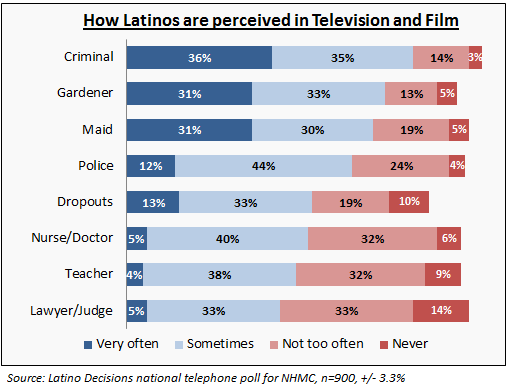
Through the Discovery of Truth, stereotypes of Latino/Hispanics can be disregarded, removed, and even not capitalized on as it has been. As seen in the table below (titled "How Latinos are perceived in Television and Film"), Latinos have more often been given the position or role of criminal, gardener, or maid by at least 2.5 times more than other roles. Latinos/Hispanics are limited in their capacity in the real world because employers are likely to view their possible Latino/Hispanic employees to be a negative addition to their business. Using the Discovery of Truth washes away a negative stereotype on Latino and encourages equal opportunity for Latino/Hispanics, and even immigrants, who often immigrate to the United States thinking that it's a Land of Dreams for all, not just whites and white-passing individuals. 


All values are important, but when you're in a minority by stance in issues or by racial difference, searching for the truth or checking your government becomes rather predominant. What's your values? Why do you think your values aligned that way? Is it influenced by racial stance? Politics? Your upbringing, therefore the culture of the times? 

Everything has influence. However, not everything has equal influence or importance. 

Wednesday, March 16, 2022

The Supreme Court of the US or, simply, "SCOTUS"


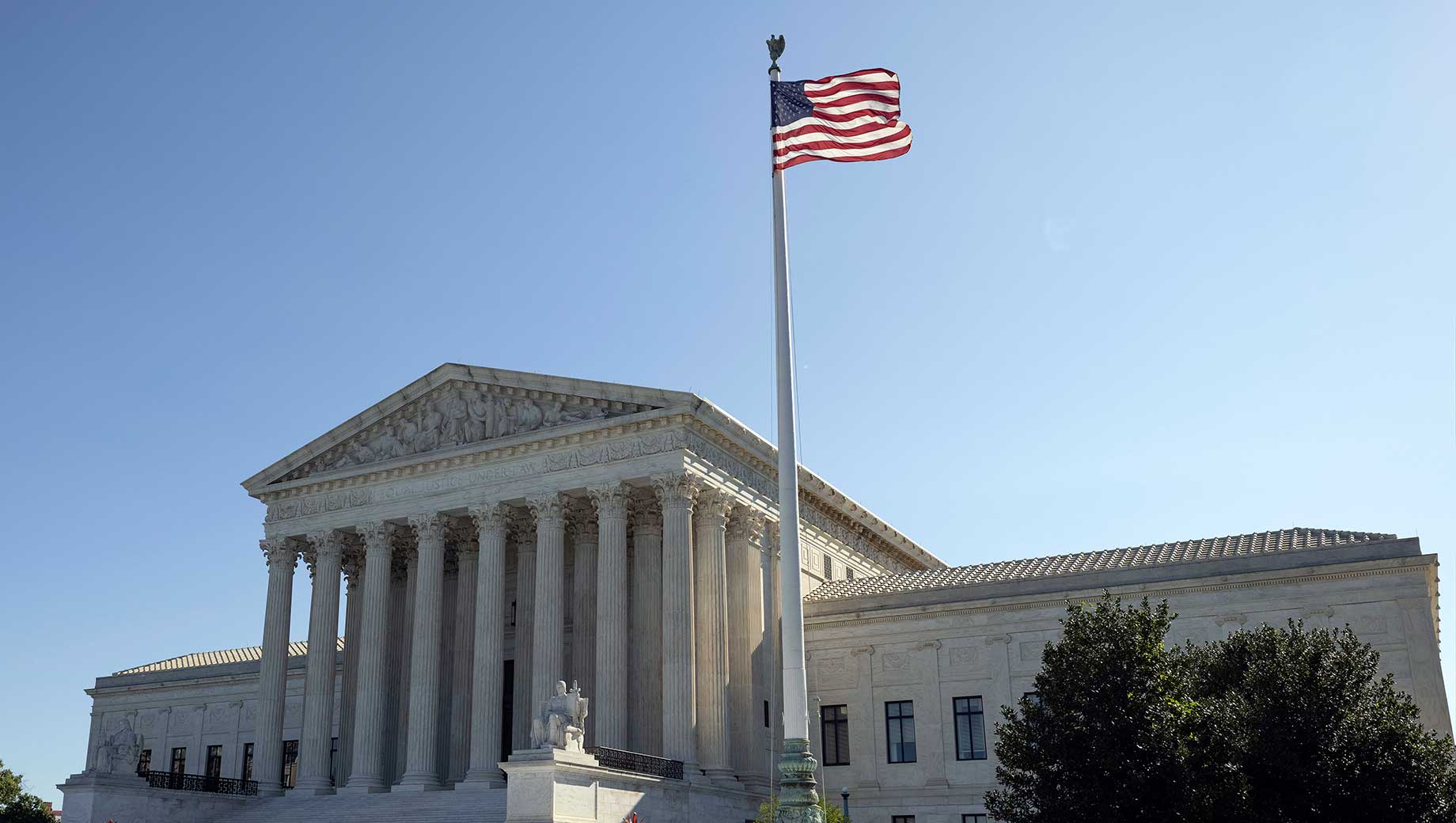
Housed in a building shaped in the grandeur of Greco-Roman elegance and strength, the Supreme Court of the United States of America both is the highest level of judicial power and shapes the definition of federal-level justice... divided between a dated white view and modern view carried by younger and/or colored Justices. A Justice on the Supreme court is simply a judge that was elected by the currently-serving President of the United States (POTUS) and serving on the bench of 9 Justices. 

116 Justices have served since the starting of SCOTUS. The nine currently serving are as follows:

  • Chief Justice John G. Roberts Jr.: selected by George W. Bush, serving since 2005
  • Justice Clarence Thomas: selected by George H.W. Bush, serving since 1991
  • Justice Stephen J. Breyer: selected by Bill Clinton, serving since 1994
  • Justice Samuel A. Alito: selected by George W. Bush, serving since 2006
  • Justice Sonia Sotomayor: selected by Barack Obama, serving since 2009
  • Justice Elena Kagan: selected by Barack Obama, serving since 2010
  • Justice Neil M. Gorsuch: selected by Trump, serving since 2017
  • Justice Brett M. Kavanaugh: selected by Trump, serving since 2018
  • Justice Amy Coney Barret: selected by Trump, serving since 2020 
(See the Supreme Court website for changes.)


AN HONORABLE MENTION
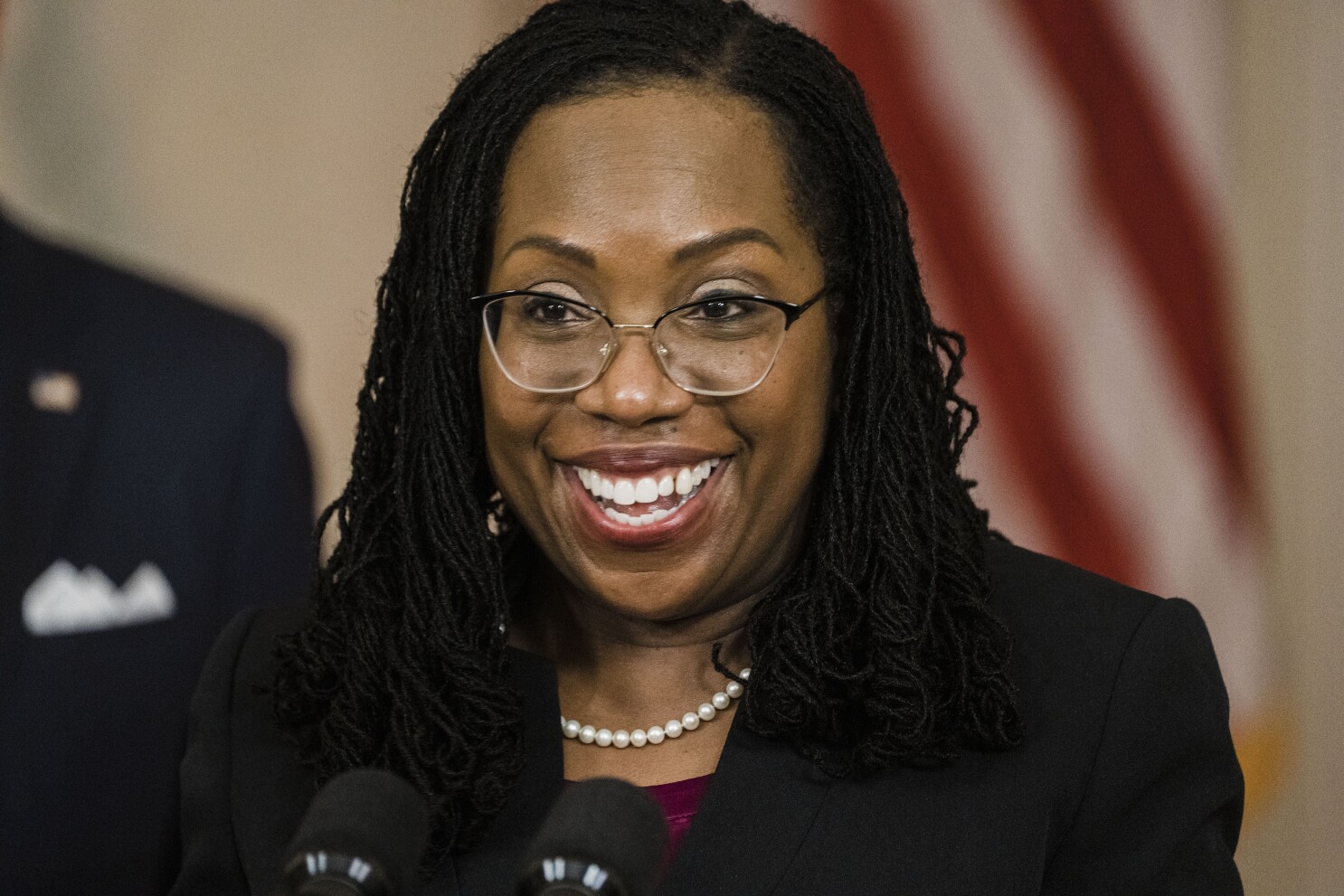
Currently serving in the U.S. Court of Appeals in the D.C. Circuit, Judge Ketanji Brown Jackson (seen below) is set to succeed current Justice Stephen Breyer, who is expected to retire at the end of his term in the summer. President Biden selected Brown Jackson to look like America and "reflect the full talents and greatness of our nation." 


What Didn't I Know? 
I grew up relatively aware of legal proceedings and legal-centric issues. When I wasn't watching kid shows, I was watching cop shows, like Law and Order or the relatively-light NCIS. However, what these shows didn't tell me were the dates and history of cases that create what's so ingrained in the legal system and the law enforcement procedure.

For instance, in Law and Order and Law and Order: SVU, theres always the assistant district attorney (ADA), the district attorney (DA), or one even the defense attorney in a variety of episodes bringing up the fact that evidence which was obtained illegally, or without a search warrant, cannot be used in a criminal case. This precedent was declared in 1961 in the case of Mapp vs Ohio. 

Precedents like those aren't always so explicit. In the Bill of Rights, it wasn't clear whether flag burning or potentially offensive speech was protected under the First Amendment's statement of "free speech." Texas vs Johnson, settled in 1989, found that speech or action presented in the case was in fact protected by the First Amendment. 

A rather currently-popular case, Roe v Wade, was settled in 1973 by a majority ruling. As stated by History.com, the Justices at the time ruled "that women have a right to an abortion during the first two trimesters." The case, which challenged the constitutionality of Texan laws criminalizing abortion, was presented by a single pregnant woman (Jane Roe) and other appellants (et al). This case in its entirety is what is considered a landmark case.

Landmark case: a court case studied for its historical and legal significance

Roe v Wade protects a woman's liberties of her own body and has been standing as the most pivotal example of protections of women. It prevents excessive governmental interference with a woman's right and ability to get an abortion. However, recently, the case has been threatened with removal, therefore jeopardizing the most basic of human rights for women in the U.S.: anatomical freedom and personal liberty.


SCOTUS is not Ultimate 
There wasn't much for me to learn about SCOTUS. Landmark cases and their rulings, like Roe v Wade, are subject to the culture of the times and the progression of the current Justices. Originally, Roe v Wade passed with 7-2 favor. Today, with the older white Justices and Trump's elected Justices, there is an extreme risk that Roe v Wade could be repealed. 

However, in a certain way, states have already repealed the rulings. Texas, lately notorious for anti-"progressive" laws (anti-LGBTQ+ laws like the Don't Say Gay law, anti-abortion laws, and limiting of women's other rights), has already put the Heartbeat Bill into effect, banning and therefore criminalizing abortion after 6 weeks of pregnancy. (Most women don't realize they're pregnant at this stage.) 

What should you take away from this? SCOTUS is not ultimate law. It's simply the federal precedent and standard, not binding every state to its standards. Texas, as controversial as its constant jabs at women's rights are, is allowed to pass laws in contradiction of even a 1973 Supreme Court case, landmark or not. Each state may pass its own laws, and every law or ruling has its victims.

Sunday, March 13, 2022

Five Sources I use


It should come as no surprise when a journalism student or an established journalist says they're never willing to trust a single source of news. Currently, I'm a first-year journalism student with heavy involvement in news casting. On Mondays, I work my role in a broadcasting club as part of cast, the talent, for international news. One of my responsibilities as anchor is to find stories, verify them, and write a script. My minimum number of sources to verify is three different writers and from different news stations. I don't trust any source as individual sources, but I trust the same story across different writers and stations.

For now, out of the sources I've used, some are listed below:

  1. CNN
  2. BBC
  3. Euronews
  4. NPR
  5. NBC
CNN: Cable News Network
Headquartered in Atlanta, CNN was founded in 1980 as a 24-hour news network. CNN has been subject to biased writing and reporting like so many sources, so it's a source I prefer to use more like journalistic Wikipedia. It's a start to searching what story I may be more interested in investigating and/or reporting on international news for Monday broadcast. The network provides a quick story one can skip through and provides images related to the story. Much of CNN's headlines are also the same headlines to other networks, which is why I call CNN a Wikipedia of journalism. It provides a start in networks based in the U.S.A.


BBC: British Broadcasting Corporation
Founded in 1922 Central London, London, BBC provides anything between World News to Business and Technology. CNN provides a little less than one of its European, specifically UK, counterparts. I use the BBC because researching and reviewing international news isn't really international research if its all done exploring the story exclusively from an American point of view. While the BBC provides more information and an alternate understanding, its website is a little busier and harder to skim through than CNN's website. However, it's a good beginning to cross reference information. Additionally, since the BBC isn't an American publication, the BBC provides an external view into the United States and other Americas.


Euronews
Euronews is set up a little differently than the previously mentioned sources and a fairly new publication, as it was founded in 1993 in Lyon, France in order to provide a European view. It accounts for general European news, world news, sports and travel-based stories, like culture. It's a blend of BBC and CNN in its set up as well. The headlines are organized with large images like CNN organizes their stories, but the writing is similarly broken up like how the BBC writes and places images. Euronews is also like the European journalists' Wikipedia: general, short, sweet, and a starting point for European news. I find some stories on the front page of Euronews that I have to dig through to find in American or more national-based publications.


NPR: National Public Radio
NPR is a non-profit broadcasting station with private and public funding going into their East Coast HQ (in Washington DC) and their West Coast HQ (in California). The East Coast HQ is the main headquarters and was founded in 1970. Unlike a majority of sources, NPR sorts its stories through News, Culture, Podcasts and Music. Live updates are on the primary home page. NPR shares most of its top headlines with CNN and is another research starting point to cross reference. I usually opt not to use NPR as a main source, but rather a base to find stories off of and grow from there with other sources.


NBC: National Broadcasting Company

Lastly, NBC, based primarily in NYC since 1926, is a rather popular news station, reporting from international news to entertainment both in broadcast and print. It's another American publication sharing much with other American news stations but with a slightly bigger amount of stories and writers on similar stories. While I do like using NBC as a more credible source than CNN, it doesn't provide as easy access to stories without having to specify "X news" in a search engine. Providing live updates and a multitude of stories, NBC is one of the main sources I reference to verify a publication I don't trust as much (like CNN). 


Trust but verify every source.